MCT Products

HYDRO-CHEM SA (Pty) Ltd is your trusted supplier of organic coconut products. We represent a prominent international manufacturer and wholesale supplier specialising in MCT oils and MCT powder. This global company is committed to creating innovative, sustainable, plant-based functional food products. They invest heavily in research, development, and commercialisation of health-related products aimed at enhancing people's health and well-being.

Understanding Medium-Chain Triglycerides (MCT)

Medium-chain triglycerides (MCT) are a type of lipid consisting of three intermediate carbon-length saturated fats linked to a glycerol backbone, known as triacylglycerols or triglycerides.

MCTs are fatty acid esters of glycerol that possess unique chemical and physical properties, setting them apart from more common long-chain triglycerides (LCTs).
Picture%2010
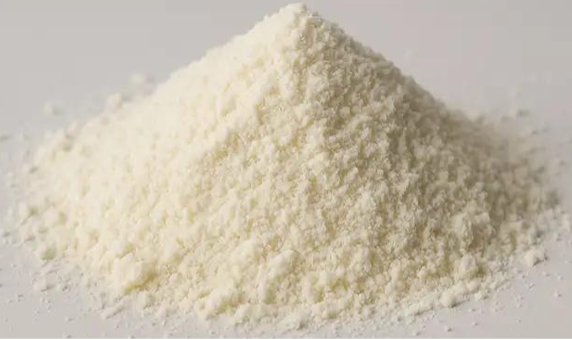
Medium-Chain Triglyceride Powder C8-Caprylic Acid & C10-Capric Acid
Spray-dried with Acacia or Tapioca Powder
Chemical Structure & Composition

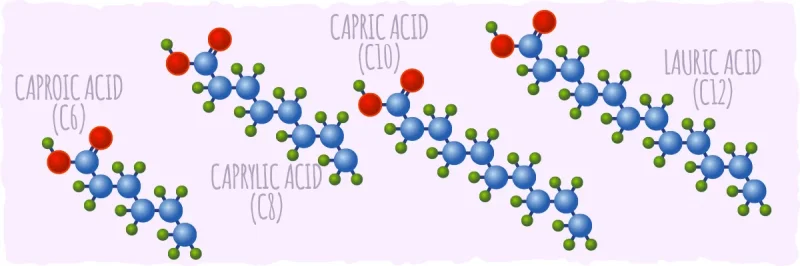
  • Glycerol Backbone: MCTs are made up of a glycerol molecule bonded to three fatty acid chains.
  • Chain Length: The fatty acids in MCTs feature an aliphatic tail of 6 to 12 carbon atoms.
  • Key Fatty Acids:
    • Caproic acid (C): Hexanoic acid.
    • Caprylic acid (C): Octanoic acid.
    • Capric acid (C₁₀): Decanoic acid.
    • Lauric acid (C₁₂): Dodecanoic acid (Some experts may exclude C₁₂ due to its metabolic similarity to LCTs).
  • Saturation: Most MCT fatty acids are fully saturated, meaning there are no double bonds between carbon atoms.

    table mct molecules%20 %20Hydro Chem

    A specific MCT molecule would be named like:

    • Glyceryl tri-octanoate (for C8) – Caprylic Acid
    • Glyceryl tri-decanoate (for C10) – Capric Acid

    These follow the structure:

    Triglyceride (Triacylglycerol) = glycerol backbone + 3 fatty acid chains
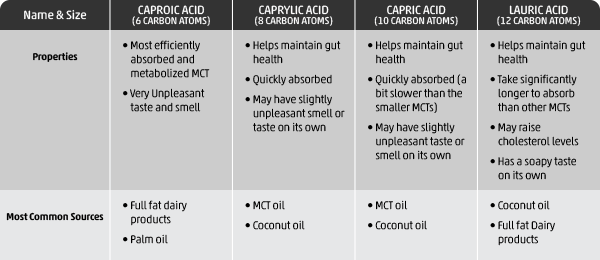
    mct specifics the different types of medium chain triglycerides

    section 3181784534846 picture11

    The Benefits of Medium-Chain Triglycerides

    Medium Chain Triglycerides (MCTs) are unique fatty acids that function differently from other fats. Due to their distinct digestion and assimilation processes, MCTs offer a wide range of benefits, including:

    • Boosting weight loss
    • Reducing appetite
    • Enhancing exercise performance and endurance
    • Increasing energy levels
    • Lowering cardiovascular disease risk in some individuals
    • Supporting brain health and cognitive function
    • Acting as a potential treatment for conditions involving impaired fat metabolism
    • Improving insulin sensitivity and blood sugar levels
    • Strengthening immune system function and regulation

    While coconut oil and other MCT-rich foods can provide many of these benefits, using an MCT supplement is the most efficient way to experience them all. Choose a sustainably sourced MCT oil or MCT powder that combines caprylic acid (C₈) and capric acid (C₁₀) without any unnecessary additives.

    Physical & Chemical Properties

    • Polarity & Solubility: MCTs are more polar and significantly more water-soluble than LCTs.
    • Viscosity & State: They exhibit lower viscosity and lower melting points than LCTs, remaining liquid at room temperature.
    • Energy Density: MCTs provide approximately 8.3–8.4 kcal/g, compared to the 9.0–9.2 kcal/g provided by LCTs.
    • Thermal Stability: They have a low smoke point (around 140–160°C), making them prone to foaming and unsuitable for deep frying.
    • Oxidative Stability: Despite their low smoke point, they generally show high oxidative stability due to their saturated nature.

    Metabolic Chemistry

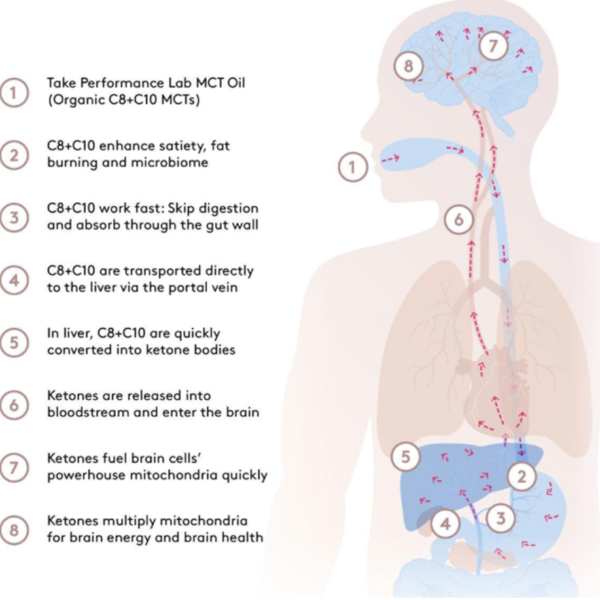
    • Digestion: MCTs are hydrolysed faster and more efficiently than LCTs.
    • Absorption: They do not require bile salts or pancreatic lipase for absorption.
    • Transport: Absorbed directly into the portal vein, they are transported to the liver, bypassing the lymphatic system.
    • Mitochondrial Entry: They cross mitochondrial membranes independently of the carnitine transport system, allowing for rapid β-oxidation.
    • Ketogenesis: Their rapid metabolism often leads to the production of ketone bodies, which serve as an alternative fuel for the brain.

    List of Medium-Chain Fatty Acids

    Lipid No.

    Name

    Salt / Ester

    Formula

    Mass   g/mol

    Common

    Systematic

    Common

    Systematic

    Molecular

    Structural


    C6

    Caproic Acid

    Hexanoic

    Caproate

    Hexanoate

    C6H12O2

    CH3(CH2)4COOH

    116.16

    C8

    Caprylic Acid

    Octanoic

    Caprylate

    Octanoate

    C8H16O2

    CH3(CH2)6COOH

    144.21

    C10

    Capric Acid

    Decanoic

    Caprate

    Decanoate

    C10H20O2

    CH3(CH2)8COOH

    172.26

    C12

    Lauric Acid

    Dodecanoic

    Laurate

    Dodecanoate

    C12H24O2

    CH3(CH2)10COOH

    200.32

    Palm Kernel MCT Oil vs. Coconut MCT Oil

    Both palm kernel and coconut oils are natural sources of medium-chain triglycerides, with some notable distinctions:

    • Composition: Coconut oil generally contains slightly more lauric acid (C₁₂) and double the amounts of caprylic (C₈) and capric (C₁₀) acids compared to palm kernel oil.
    • Functionality: Both palm- and coconut-based MCT oils offer similar performance and benefits.
    • Sustainability: Palm-based MCT oil can be more land-efficient, yielding more oil per hectare than coconut. However, sustainability concerns surrounding palm oil production are significant.
    • Cost and Availability: Palm kernel oil tends to be more cost-effective and readily available at an industrial scale.

    Natural Sources & Synthesis

    • Natural Sources: Found primarily in coconut oil, palm kernel oil, and bovine milk.
    • Commercial Synthesis: Produced through fractionation of coconut or palm kernel oil, where fatty acids are separated by distillation and then re-esterified onto a glycerol backbone.

    Who Should Avoid MCT?

    • Diabetes: MCTs can lead to an accumulation of ketones, which can be problematic for individuals with diabetes.
    • Liver Problems: Since MCTs are processed by the liver, they can cause serious issues for those with liver disease.

    Unlock the power of MCTs with HYDRO-CHEM SA (Pty) Ltd!