Natural Occurrence
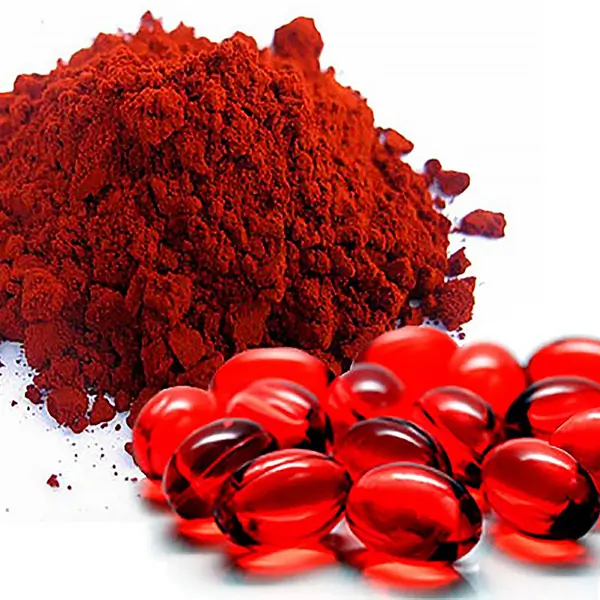
Haematococcus pluvialis is known to have the highest levels of astaxanthin in nature. When grown commercially, it can produce over 40 grams of astaxanthin per kilogram of dry weight.
Use of Synthetic Astaxanthin in Animal Feed
Synthetic astaxanthin is mainly used in animal feed to improve the colour of fish, like salmon, trout, red sea bream, koi, and tai. In the wild, these fish get their colour from their diet, which includes algae and crustaceans.
Challenges in Fish Farming and Consumer Appeal
In fish farms, where natural sources of colour are missing, these fish often look pale, which is less appealing to consumers and makes them harder to sell.
Chemistry
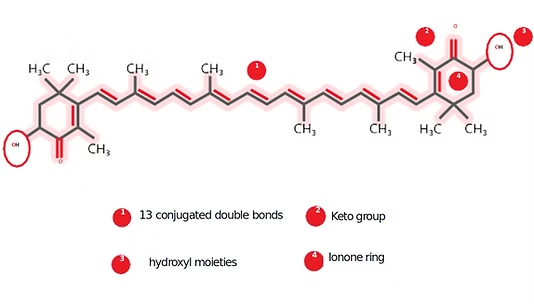
Astaxanthin exists in three primary enantiomeric forms: 3S-3'S, 3R-3'S, and 3R-3'R. These forms are defined by the spatial orientation of the hydroxyl (OH) groups on chiral carbon number 3.
Synthetic astaxanthin is produced as the free (un-esterified) xanthophyll in a 1:2:1 mixture of the three stereoisomers: 3S,3'S, 3R,3'S, and 3R,3'R.
Assessing Quality of Haematococcus Biomass and Oleoresins
The major parameters used to assess high-quality commercial Haematococcus biomass and oleoresins are high astaxanthin content in the product, low levels of biological and chemical contamination, and excellent stability of the astaxanthin in the product.
Data
For more detailed information on astaxanthin, follow the links below.
ASTAXANTHIN - Inflammation Fighter - Dr Jay Davidson
ASTAXANTHIN for HUMAN HEALTH